The Importance of CO2 in a Freshwater Aquarium
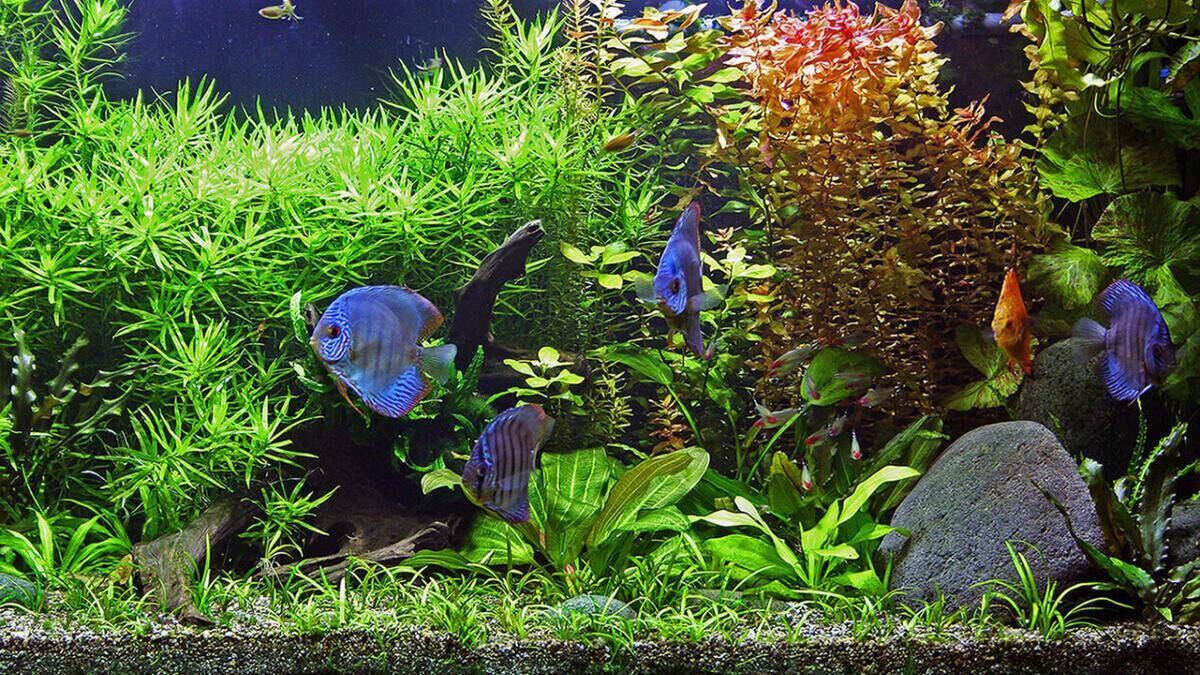
If you've ever admired those lush planted aquariums on social media — carpets of vibrant green Hemianthus callitrichoides, Rotala with blazing red hues, forests of Eleocharis gently swaying in the current — and wondered how to achieve such results, the answer often comes down to three letters: CO2.
Carbon dioxide, along with light and nutrients, is one of the three fundamental pillars of aquatic plant growth. Without a sufficient supply of CO2, even the best lighting and richest substrate will only deliver mediocre results. Understanding its role and mastering its injection is the key that separates a "decent" tank from a breathtaking aquascape.
CO2: The Fuel of Photosynthesis
How Plants Use CO2
Aquatic plants, just like their terrestrial cousins, carry out photosynthesis: they absorb CO2 and light to produce sugars (their energy) and release oxygen. The simplified formula:
6 CO2 + 6 H2O + light → C6H12O6 + 6 O2
In an aquarium, dissolved CO2 is the only source of carbon available to plants. Unlike ambient air (which contains ~400 ppm of CO2), the water in an aquarium without injection contains only 2 to 5 mg/L — far too little for optimal growth.
How Much CO2 Do You Need?
| CO2 Level | Concentration | Result |
|---|---|---|
| No injection | 2-5 mg/L | Slow growth, stunted plants |
| Light injection | 10-15 mg/L | Decent growth, undemanding plants OK |
| Optimal injection | 20-30 mg/L | Vigorous growth, intense colours |
| Overdose | > 35 mg/L | Dangerous for fish (suffocation) |
The ideal target is between 20 and 30 mg/L. Above 35 mg/L, CO2 becomes toxic to fish and invertebrates — the pH drops too low and available oxygen decreases.
Signs of a CO2 Deficiency
Your tank is probably lacking CO2 if you notice:
- Slow or stagnant growth — plants barely grow despite good lighting
- Yellowing leaves — especially new shoots, a sign the plant can't synthesise enough chlorophyll
- Invasive algae — paradoxically, a lack of CO2 favours algae (which are less demanding than higher plants)
- White deposits on leaves — plants trying to extract CO2 from bicarbonates in the water (calcium carbonate precipitation)
- Plants rarely "pearl" — oxygen bubbling on leaves (pearling) is a sign of active photosynthesis, absent without sufficient CO2
CO2 Injection Systems
1. Pressurised Kit (Recommended)
This is the gold standard of CO2 injection. A pressurised system includes:
- CO2 cylinder: refillable, from 500g to 6kg depending on tank size
- Regulator with pressure gauge: reduces cylinder pressure (~50 bar) to working pressure (~1-2 bar)
- Solenoid valve: shuts off CO2 at night (when plants don't need it and oxygen levels could drop)
- Bubble counter: allows you to visualise and adjust the flow rate
- Diffuser: dissolves CO2 into the water (ceramic, inline, or reactor)
Pros: stable and precise flow, long-lasting, best value for money over time
Cons: initial investment (€100-250), requires refills
2. DIY System (Yeast)
The budget method: a mix of water, sugar, and baker's yeast in a bottle produces CO2 through fermentation.
Pros: very affordable (< €20), easy to set up
Cons: irregular flow, can't be turned off at night, output decreases over time, unsuitable for tanks > 100L
3. Chemical Systems
Tablets or solutions that release CO2 on contact with water (e.g. Seachem Excel, Easy Carbo).
Pros: no equipment needed, easy to use
Cons: not actual CO2 but glutaraldehyde (an algaecide that provides some organic carbon), limited results, can be toxic to certain plants (Vallisneria) and invertebrates
Choosing Your Diffuser
The diffuser is crucial — it determines how effectively CO2 dissolves into the water.
Ceramic Diffuser (In-Tank)
- Placed inside the aquarium, produces fine bubbles
- Efficiency: 60-70% (some CO2 escapes at the surface)
- Easy to install, but visible in the tank
- Requires regular cleaning (diluted bleach)
Inline Diffuser
- Connects to the return hose of an external filter
- Efficiency: 90%+ (near-total dissolution)
- Invisible in the tank, highly efficient
- Requires an external filter
CO2 Reactor
- Contact chamber where CO2 is dissolved by internal agitation
- Efficiency: 95%+ (best possible dissolution)
- Ideal for large tanks (> 300L)
- Bulkier and more expensive
The CO2 / pH / KH Relationship
Dissolved CO2 forms carbonic acid (H2CO3) in water, which lowers the pH. This relationship is predictable and follows a well-known reference table:
| KH (dKH) | pH 6.0 | pH 6.5 | pH 7.0 | pH 7.5 |
|---|---|---|---|---|
| 1 | 30 mg/L | 9.4 | 3.0 | 0.9 |
| 3 | 89 mg/L | 28 | 8.9 | 2.8 |
| 5 | 149 mg/L | 47 | 15 | 4.7 |
| 8 | 238 mg/L | 75 | 24 | 7.5 |
By measuring your KH and pH, you can deduce your CO2 concentration. This is also the principle behind the drop checker (permanent test): a colour indicator in a KH 4 solution that turns green when CO2 is in the optimal range (20-30 mg/L).
- 🔵 Blue = insufficient CO2 (< 15 mg/L)
- 🟢 Green = optimal CO2 (20-30 mg/L)
- 🟡 Yellow = excessive CO2 (> 35 mg/L, danger!)
Practical Tips
When to Inject CO2?
- Turn on CO2 1 hour before lights — to allow the concentration to build up
- Turn off CO2 1 hour before lights out — plants don't need it in the dark
- Use a solenoid valve on a timer to automate this
- At night, plants consume O2 and produce CO2 — no need to add more
Dialling in the Right Flow Rate
- Install a drop checker on the opposite side from the diffuser
- Start with a low flow rate (1 bubble per second for 100L)
- Gradually increase until the drop checker turns lime green
- Watch your fish: if they gasp at the surface or seem lethargic → too much CO2, reduce immediately
- Fine-tuning takes 2-3 days (the drop checker has a ~2h response delay)
Common Mistakes
- Too much CO2 at once → increase gradually over several days
- No solenoid valve → CO2 runs at night, pH crashes, fish suffer
- Poorly placed diffuser → place it under the filter flow for better distribution
- Forgetting water circulation → good surface agitation helps distribute CO2 (but too much causes off-gassing!)
- Neglecting other parameters → CO2 alone isn't enough — you also need light + macro/micronutrients (NPK, iron)
CO2 and Plants: Who Needs It Most?
Easy Plants (CO2 Optional)
These plants grow without CO2 injection, but benefit greatly from it:
- Anubias (all species)
- Cryptocoryne
- Java Moss (Taxiphyllum barbieri)
- Vallisneria
- Echinodorus
Demanding Plants (CO2 Essential)
Without CO2, these plants will decline or remain stunted:
- Hemianthus callitrichoides (HC Cuba)
- Glossostigma elatinoides
- Rotala (macrandra, H'Ra, colorata)
- Ludwigia super red
- Pogostemon helferi (Downoi)
- Riccardia chamedryfolia
Is the Investment Worth It?
Absolutely yes. CO2 injection is probably the single upgrade with the greatest impact on a planted aquarium. Results are visible within weeks:
- Growth 3 to 5 times faster
- Noticeably more vivid colours (especially reds)
- Healthier plants → fewer algae
- Daily pearling (O2 bubbles on leaves — a magnificent sight)
- Access to a much wider range of plant species
A quality pressurised kit costs between €100 and €250, with refills every 2-6 months depending on the tank. It's a reasonable investment to radically transform your aquarium.
Conclusion
CO2 is the missing link in many planted aquariums. If you have good lighting, a nutrient-rich substrate, but your plants are stalling or algae are taking over, CO2 injection is very likely the solution.
Start with a system suited to your budget and tank, adjust gradually, monitor your drop checker, and watch the transformation unfold. Within a few weeks, your aquarium will go from a decent tank to a true underwater garden.
The Blue Freshwater app lets you track your CO2, pH, and KH parameters, set maintenance reminders, and share your results with the community. Download it and join the aquascapers who've made the leap!
This article is part of our Fresh Guides dedicated to freshwater fishkeeping. Find all our tips on the Blue blog.